
 ,
,


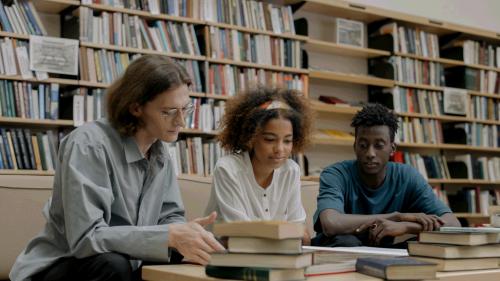
Knowledge has value when others can build on it. That requires more than preserving information or making it available. People need to be able to understand, use, question and further develop knowledge, and ultimately pass it on to others.
Sharing knowledge is a principle of The Owl’s Nest. It shapes how learning, development, documentation and building on what others already know are approached within the project. What someone discovers or learns does not have to remain with that one person, but can spread, change and continue to grow.
Some of our knowledge develops through experience and can only partly be captured in words. A manual can explain which steps someone should follow, while experience also consists of observations, judgements and skills that develop through doing. You may hear from a sound that something is not running properly, feel from the material whether a tool is adjusted correctly, or recognise from small details whether a connection is reliable.
This is often called experiential or tacit knowledge. It grows through watching, listening, trying, making mistakes, comparing and trying again. Documentation helps make such knowledge more accessible and transferable, while experience deepens further through application and practice.
A significant part of knowledge lives in people. Experience built up over decades can disappear when it remains with only one person. When others learn to understand and use it, that knowledge can continue to exist and develop further.
Each transfer can also produce something new: a different explanation, a better method, a new application or a connection with knowledge from another field. Sharing knowledge therefore contributes both to continuity and to further development.
Free knowledge begins with the principle that people should be able to examine, understand, use, adapt and further share knowledge. What someone learns or develops can then remain available to others, who can build on it and pass on their own insights in turn.
This principle forms part of the philosophical foundation of ASK-Solutions and also underlies The Owl’s Nest. It influences how documentation, designs, research, methods and practical knowledge are approached within the project. Comprehensibility, transferability and the ability to continue independently are important parts of this.
Technical choices can also follow from these principles. Free software and free hardware can, for example, be appropriate when they give people the freedom to examine how something works, adapt it and share improvements further. The chosen technology thereby gives practical effect to an earlier principle concerning freedom and knowledge.
Knowledge often becomes easier to understand when theory and experience complement one another. First seeing how something is approached, then trying it together and eventually continuing independently helps people understand both the actions involved and the principles behind them.
Mistakes, repetition and time are part of that process. Skill develops gradually. The aim is for someone to be able to perform an action, understand why it works and increasingly assess new situations independently.
In knowledge transfer, the roles of the person learning and the person sharing knowledge can continually change. Someone may have extensive experience in one area and be a beginner in another. A new question can also cause an experienced person to reconsider something that had become self-evident through routine.
Different experiences and fields of knowledge can complement one another and create unexpected connections. Existing knowledge is therefore both passed on and developed further.
When knowledge remains understandable and transferable, not everyone has to start from zero each time. People can build on earlier experience, improve existing solutions and make what they discover available again to others.
The essence of sharing knowledge within the project The Owl’s Nest is therefore to preserve knowledge, make it transferable and enable others to build on it.
The practical examples show how knowledge, experience and different forms of contribution come together in concrete situations and what can result from them.
On Time, knowledge and practical help you can read more about knowledge and experience as one of the ways you can contribute.
Copyright © 2026, contributors to The Owl’s Nest · Powered by Nocterra 


 Privacy Policy