
 ,
,


Choose a location to see what’s possible there for {capability.name}, which facilities are available, and what’s useful to coordinate in advance.
 Paul Krugerstraat 362021 XN Haarlem
 info@the-owls-nest.nl
 +31 23 369 0 269Spaarndamseweg 120 A11-A122021 KA Haarleminfo@the-owls-nest.nl+31 23 369 0 269
 Workshop stained glass
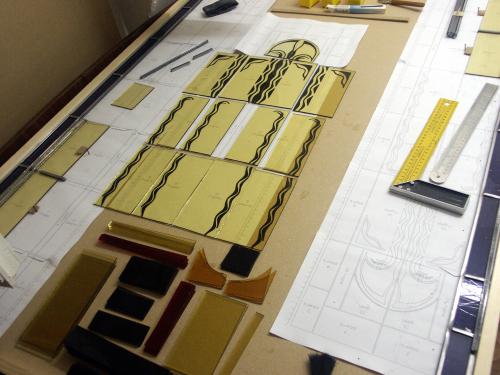 In stained glass, individually shaped pieces of glass are fitted together and assembled into a panel using lead came. The joints between the lead profiles are soldered and the assembled work is then finished further.
The technique can be used for small decorative pieces as well as large windows, doors and multi-panel works. As a design becomes larger, finer or structurally more demanding, alignment, reinforcement, profile selection and combinations with other glass techniques become increasingly important alongside cutting and leading the glass. Which aspects are included in a workshop depends on the local implementation and the work being developed.
At Paul Krugerstraat, stained glass can be approached in two ways. The introductory workshop takes about four hours and works through the complete basic process, preferably with a small piece. The in-depth workshop series continues across several sessions and develops a larger or technically more complex project, with more attention to design, structure, unusual glass shapes and combinations with other glass techniques.
Work through the basic process from cutting and fitting glass to setting it in lead came, soldering the joints and finishing the panel. The preference is for a small design that can be completed during the workshop.
Design and build a larger or more complex work across connected sessions, with greater attention to structure, reinforcement, profile selection, unusual glass shapes and combinations of stained glass with other techniques.
The introductory workshop is the direct starting point if you want to learn the classic stained glass technique and work through the process from design to finished panel. The preference is for a small design that can be completed within the available time. If you would rather begin a somewhat larger project, that is also possible at Paul Krugerstraat; anything that cannot be completed during the workshop can afterwards be continued independently at home or during separate periods through Use the workshop.
If you want to design and build a larger or technically more complex project together from start to finish, with explanation, demonstration, practice and correction throughout the different stages, the in-depth workshop series provides several connected sessions for that.
If you mainly want to learn to work with copper foil rather than lead came, the Tiffany workshop is a better fit. If your interest is mainly in painting on glass and then firing it in a kiln, see the Kiln fired glass painting workshop.
No previous glassworking experience is required. We begin with the tools, different types of glass, safety and the construction of a stained glass panel. You then work from a simple design and build your own piece step by step.
You learn to cut the glass to shape from the design and use grozing pliers or a glass edge grinder to make the pieces fit. The glass pieces are then assembled into the design using lead came.
The joints between the lead profiles are soldered, after which the panel is checked and further finished with putty or sealant.
The preference is for a small design that can be completed within the available time, so you can work through the entire process from start to finish. If you would rather begin a larger project, that is possible as well; anything that cannot be completed during the workshop can afterwards be continued independently at home or during separate periods through Use the workshop.
| Length | About four hours |
|---|---|
| Sessions | One workshop session |
| Group | Small group up to 4 |
| Individual | Yes |
| Where | At The Owl’s Nest – Paul Krugerstraat |
| Age | Ask about suitability |
| Experience | No previous glassworking experience required |
| Planning | By arrangement; no fixed workshop schedule |
| Included | Coffee or tea and something small; use of the required tools and safety equipment |
| Materials | Basic materials including glass, lead came, solder and putty or sealant are provided |
| Result | A small finished stained glass piece, or the beginning of a larger personal project |
| Price | € 50.00 per person Ask about the introductory workshop |
In the in-depth workshop series you design and build a larger or technically more complex stained glass project across several connected sessions. The basic operations continue to recur (designing, cutting and fitting glass, leading, soldering and finishing) but larger work brings structure, alignment, material choice and interaction with other glass techniques much more strongly into the process.
The distinction from continuing independently at home or using the workshop for separate working periods lies mainly in developing the complete project together. Design choices are discussed, techniques are explained and demonstrated, and you receive direct guidance and correction while practising and carrying out the work.
For larger panels, the series can cover how and when steel-cored lead came is used, where reinforcement is needed and how its position is determined within the design. For very large panels, work exposed to wind loads, or panels intended to be mounted on the inside of an existing window frame, copper, zinc and steel profiles can also play a role.
The work can also include Y-shaped lead came for incorporation into insulated glazing, as well as adapting existing stained glass for placement within insulated glazing.
More complex designs can require sawing glass shapes that cannot conveniently be produced through cutting and grinding alone, or drilling internal openings. Glass facets can also be incorporated as part of the design.
Very fine work can involve narrow lead came or combinations of stained glass and the Tiffany technique. With smaller and more complex shapes, the working method for cutting and fitting both the glass and the lead profiles also changes.
Other glass techniques can become part of a stained glass design in several distinct ways. A line, scroll or geometric pattern can for example be etched into the glass surface or fired onto it as a solid black iron-oxide pattern.
In a kiln-fired painted figure or other representation, one large, detailed image is built from many individual pieces of coloured glass. The colour of the glass forms the basis of the image: for example, red pieces of glass may be used for a red coat. On each individual piece, kiln-fired painting adds black lines, shadows, hatching, dithering and coarser textures, so that the separate pieces together form folds, faces, hands, clothing, architecture and other details. In this way, a classical or modern representation can consist of tens or hundreds of pieces of glass and extend across several panels, as in large figurative windows and church windows.
A painted scene can also be incorporated as a separate painted piece of glass within a larger stained glass composition. A landscape, portrait or flower can for example form an oval painted centrepiece surrounded by a window otherwise constructed from separate pieces of glass and lead came.
Which of these techniques becomes part of a project depends on the design and purpose of the work. A larger project also contains a substantial amount of repeated work. Some of that can be carried out independently at home or during separate workshop periods; in the in-depth workshop series, design, explanation, demonstration, practice and correction remain connected throughout the complete project.
| Length | Several half-days, depending on the project |
|---|---|
| Sessions | Several connected sessions, often spread over multiple weeks |
| Group | No |
| Individual | Yes |
| Where | At The Owl’s Nest – Paul Krugerstraat |
| Age | Ask about suitability |
| Experience | Adapted to existing experience and the intended project |
| Planning | Planned individually around the project |
| Included | Use of the workshop tools, equipment and agreed working facilities |
| Materials | Agreed separately according to the project |
| Result | A larger or technically more complex stained glass project developed through the series |
| Price | By arrangement Based on time, sessions and materials. Discuss an in-depth stained glass project |
At Spaarndamseweg, stained glass is offered as an introductory workshop of about four hours. You work through the complete basic process on a small design that can be completed within the workshop: cutting and fitting the glass, setting the pieces in lead came, soldering the joints and finishing the panel.
No previous glassworking experience is required. We begin with a simple design and explain the tools, types of glass, safety and the construction of a classic stained glass panel. The project is deliberately kept small so there is enough time to experience every stage and complete the piece within the workshop.
You learn to cut glass to shape from the design, use grozing pliers or a glass edge grinder to make the pieces fit, assemble them into a panel with lead came and solder the joints. The panel is then checked and further finished with putty or sealant.
| Length | About four hours |
|---|---|
| Sessions | One workshop session |
| Group | Small group up to 2 |
| Individual | Yes |
| Where | At The Owl’s Nest – Spaarndamseweg |
| Age | Ask about suitability |
| Experience | No previous glassworking experience required |
| Planning | By arrangement; no fixed workshop schedule |
| Included | Coffee or tea and something small; use of the required tools and safety equipment |
| Materials | Basic materials including glass, lead came, solder and putty or sealant are provided |
| Result | A small finished stained glass piece to take home |
| Price | € 50.00 per person Ask about the stained glass workshop |
For a larger or technically more complex project that is designed and built together across several sessions, the in-depth stained glass workshop series is offered at The Owl’s Nest – Paul Krugerstraat.
If you are looking for a longer period of practical learning rather than a defined workshop, Learning and rebuilding offers routes in which skills, confidence and independence can develop through continued practical activity.
Already have your own project and mainly need workspace, facilities or occasional practical input? Explore how using the workshop can support work at your own pace.
Explore the wider technical, creative and practical capabilities within The Owl’s Nest, including related activities, skills and workshop subjects.
See the current locations, their facilities and local character, and how workshop activities and other forms of participation take shape at each one.
Copyright © 2026, contributors to The Owl’s Nest · Powered by Nocterra 


 Privacy Policy