
 ,
,


At present, no operator or location has information available for environment.
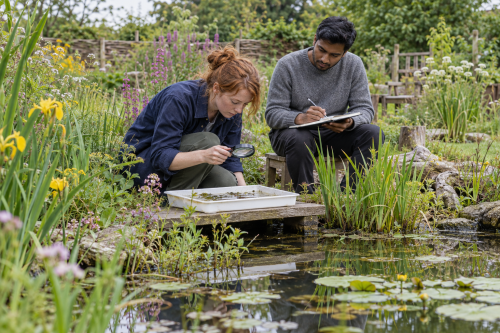 Environment is about living systems and the conditions that sustain them: biodiversity, soil, water, air and climate, as well as the effects of human activity on those systems. It includes observing and caring for nature, but also understanding the consequences of choices about materials, energy, pollution and resources.
Within the shared work model, environmental questions arise directly in work with plants and soil, and can also appear in decisions about materials, product life, energy and waste. Measurements, sensors and practical experiments can help make changes in the surrounding environment visible and open to investigation.
With this capability, plants, soil, growing conditions, care and living systems are already part of the work itself.

Gardening directly involves the environment because plants, soil, growing conditions, care and living systems are at the heart of the activity. Choices about species, water, soil and methods make environmental consequences tangible.
With these capabilities, the relationship develops when material choices, product life, energy, waste, measurement or effects on the environment become part of the activity.


Repair and maintenance can bring product life, resources, energy, emissions, waste and replacement options into the same decision. This helps people consider when keeping something in use makes sense and what different choices involve.


Woodwork, metalwork, welding, glass art, ceramics, textiles and 3D printing can bring material origin, resource use, energy, waste, processing, reuse and product life into the work. Materials and processes make those environmental questions concrete.


Visual arts and music can explore the environment through ecological observation, material choices, energy use, product life or sound in the surrounding environment. The subject of the work shapes the strength of that connection.


Electronics, science experiments and digital work can be used to measure and analyse soil, water, living systems, pollution, resource use and other environmental questions. Sensors, data and practical experiments make those questions open to investigation.
Copyright © 2026, contributors to The Owl’s Nest · Powered by Nocterra 


 Privacy Policy