
 ,
,


At present, no operator or location has information available for lifelong learning.
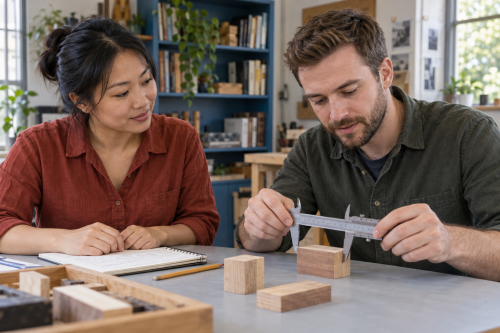 Lifelong learning is about developing knowledge, understanding, skills and critical judgement throughout life. It can happen in school, college or a course, but also while making, repairing, practising, asking questions or sharing knowledge with other people.
Within the shared work model, learning often happens through doing: someone demonstrates a technique, another person tries it, mistakes are investigated, measurements are compared and knowledge is passed on during real practical work. This can support informal and non-formal learning as well as more structured learning.
With these capabilities, observation, inquiry, learning or knowledge exchange are already part of the activity itself.


Gardening, science experiments and social contact involve observation, questions, inquiry and knowledge exchange. Learning can happen formally, informally or simply through doing and discussing things with others.
With these capabilities, the learning relationship develops when practical work is used to understand, practise, investigate or explain something.


Repair, vehicles, bicycles, electronics and digital systems offer many ways to learn by investigating faults, measuring, comparing explanations and understanding how parts work together. The learning happens through the practical process itself.


Wood, metal, welding, glass, ceramics, textiles and 3D printing can support learning through exploring materials, measurement, joining, techniques and design choices. Demonstration, guided practice, comparison and reflection can all sit within the making process.


Visual arts and music offer ways to learn through observation, listening, experimentation and discussing creative choices. This can happen in formal teaching or through informal exploration and knowledge exchange.
Copyright © 2026, contributors to The Owl’s Nest · Powered by Nocterra 


 Privacy Policy