
 ,
,


At present, no operator or location has information available for circular economy.
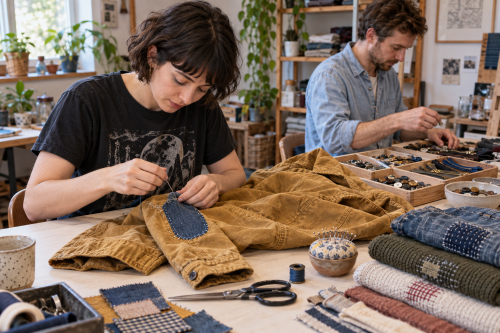 Circular economy is about reducing unnecessary resource use and waste while keeping products, components and materials useful for as long as possible. Maintenance, repair, adaptation and reuse are part of that, alongside choices about durability, replacement and the recovery of materials.
Within the shared work model, circular practice can take the form of direct repair and maintenance, but also replacement parts, reuse, material investigation, documentation and transferable systems that help existing products and materials remain useful.
With these capabilities, repair, maintenance or adaptation are already important parts of the work, helping existing products, materials or components remain useful.


Repair, maintenance, diagnosis and adaptation help keep existing products, vehicles, bicycles, devices and components useful. Retention, repair and longer product life are therefore built into these capabilities.


Woodwork, metalwork, welding, music and textiles can involve repairing or adapting existing structures, materials, instruments and textile objects. This can preserve function, materials and skilled work for longer.
With these capabilities, the circular relationship develops when they are used for reuse, repair, replacement parts, material investigation or extending the useful life of products and materials.


Visual arts, glass art and ceramics can support circularity by retaining, adapting or reusing existing materials and objects, or by giving them a new useful role.

Gardening can connect with circularity through reusing equipment and making local use of organic materials or other useful flows, including composting where appropriate. What can be reused depends on the material and context.


3D printing, investigation and digital work can support repair and longer use through replacement parts, research into durability and repair options, documentation and transferable software or systems.
Copyright © 2026, contributors to The Owl’s Nest · Powered by Nocterra 


 Privacy Policy