
 ,
,


At the moment, you can use {capability.name} at one location. Below you’ll see what’s usually possible there, which facilities are available, and what you can arrange in terms of materials or consumables.
 Paul Krugerstraat 362021 XN Haarlem
 info@the-owls-nest.nl
 +31 23 369 0 269
 Workshop kiln fired glass painting
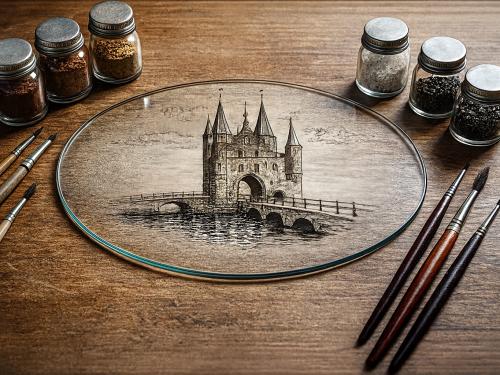 Kiln fired glass painting builds images directly on glass with glass pigments that are fixed through firing in a kiln. Lines, silhouettes, tonal areas and colour can be developed in layers, with each firing making it possible to evaluate the result and continue working on the image.
The technique can be used for small studies as well as finished decorative or architectural glasswork. Glass powders and frit can add colour and structure, while painted glass can also be combined with stained glass or the copper foil technique used in Tiffany work. The pigments, firing sequence and supporting techniques depend on the work being made and the way a workshop is implemented at a location.
At Paul Krugerstraat, kiln fired glass painting can be approached in two ways. The introductory full-day workshop follows the complete basic process on two small glass plates, including two firings. The in-depth workshop series continues over several sessions and uses finished work and larger projects to build broader technique and practical working experience.
Work through the basic process from design and black glass paint to the first firing, evaluation, colour and a second firing. The day uses two small glass plates so you can experience the complete sequence and compare what happens before and after firing.
Continue through connected sessions in which the work develops beyond test plates. Finished pieces and larger projects provide room to practise the full working sequence, use a wider range of techniques and gain practical experience through repeated preparation, painting, firing, evaluation and correction.
The introductory day is the direct starting point when you want to experience kiln fired glass painting and work through its basic sequence from design to fired result. The in-depth series is intended for continued development: repeated work, finished projects, a broader range of techniques and practical experience across the different stages of the process.
If your main interest is working with lead came or copper foil rather than painted glass, see the separate stained glass and Tiffany workshops.
No previous experience with painting or glasswork is required. We begin with the tools used during the day: brushes, sticks, knives, a painting bridge and a light box, together with personal protection, ventilation and the materials involved. For this introduction we work with ethanol, iron-oxide pigments and glass frit rather than the more heavily loaded metal-oxide pigments that can be introduced in advanced work.
Your design is placed on the light box and transferred onto two small glass plates. Because you can continue looking through the glass and paint layer while working, the design remains visible as the image is developed.
An even layer of black glass paint based on iron oxide is applied with a badger-hair brush. Instead of building every light area by adding paint, part of the technique is to pull the light back: sticks, small brushes and knives are used to remove or move paint where the glass needs to remain clearer. The first layer therefore develops mainly through silhouette and larger tonal areas.
The plates are then prepared for the first firing in the Hoaf speedburn kiln. While the glass is fired and subsequently cools, there is time for lunch, examples, questions and discussion of other ways kiln fired glass painting can be used.
After the first firing, we look at what the kiln has actually done to the lines and tonal areas. This makes the firing part of the learning process: the result can be compared with the painted layer before firing, and decisions can then be made about what should remain, become stronger or be changed.
One or both designs can then be developed further with additional lines or structures. Colour can be added with glass powders or glass granules (frit), after which the plates are prepared for a second and final firing.
During the second firing and cooling there is room to look at more advanced examples and at ways kiln fired glass painting can be combined with stained glass or Tiffany. If the glass has not cooled sufficiently by the end of the day to take it home safely, we agree when it can be collected.
| Length | Full day |
|---|---|
| Sessions | One workshop day |
| Group | Small group up to 4 |
| Individual | Yes |
| Where | At The Owl’s Nest – Paul Krugerstraat |
| Age | Ask about suitability |
| Experience | No previous painting or glassworking experience required |
| Planning | By arrangement; no fixed workshop schedule |
| Included | Coffee, tea and a simple lunch; use of the required tools and kiln |
| Materials | Glass, glass pigments, glass powders and frit are provided |
| Result | Two small painted glass plates, yours after firing |
| Price | € 75.00 per person Ask about the introductory workshop |
The in-depth workshop series develops kiln fired glass painting across several connected sessions. It is intended for people who want to build broader working experience through finished pieces and projects that require choices to be made across a longer sequence of designing, painting, firing, evaluating and continuing.
A project can be relatively contained, such as a finished window hanger with your own design, or develop into a more complex painting such as a landscape, still life, portrait or narrative image. Larger work can include a painted panel intended for a lamp, window or door.
Repeated sessions provide room to work more deliberately with line, tonal structure, colour, glass powders and frit. Results from one firing can be assessed before the next layer is planned, making correction and adjustment part of the working process rather than something compressed into a single exercise.
Painted glass can become part of a wider glass project. Depending on the intended work, it can be combined with classic stained glass using lead came or with the copper foil technique used in Tiffany work.
Where the experience, project and working arrangement make this appropriate, the series can also include more intensive, more heavily loaded pigments based on metal oxides and glass powders, as well as techniques that matte or etch the glass surface itself to create patterns and control light.
The more intensive materials and surface techniques are worked with individually, with the required time for explanation, personal protection, ventilation and clear safety arrangements. Which techniques become part of the series is determined by the work being developed rather than by trying to fit every possibility into a single session.
| Length | By arrangement, depending on the project |
|---|---|
| Sessions | Several connected sessions |
| Group | Only by arrangement |
| Individual | Yes |
| Where | At The Owl’s Nest – Paul Krugerstraat |
| Age | Ask about suitability |
| Experience | Adapted to existing experience and the intended project |
| Planning | Planned individually around the series and project |
| Included | Use of the workshop tools, kiln and agreed working facilities |
| Materials | Agreed separately according to the techniques and project |
| Result | Finished pieces or a larger glass project developed through the series |
| Price | By arrangement Based on time, sessions and materials. Discuss an in-depth workshop series |
If you are looking for a longer period of practical learning rather than a defined workshop, Learning and rebuilding offers routes in which skills, confidence and independence can develop through continued practical activity.
Already have your own project and mainly need workspace, facilities or occasional practical input? Explore how using the workshop can support work at your own pace.
Explore the wider technical, creative and practical capabilities within The Owl’s Nest, including related activities, skills and workshop subjects.
See the current locations, their facilities and local character, and how workshop activities and other forms of participation take shape at each one.
Copyright © 2026, contributors to The Owl’s Nest · Powered by Nocterra 


 Privacy Policy