
 ,
,


 Repair
Choose a location to see what’s possible there for repair, which facilities are available, and what’s useful to coordinate in advance.
 Paul Krugerstraat 362021 XN Haarlem
 info@the-owls-nest.nl
 +31 23 369 0 269Spaarndamseweg 120 A11-A122021 KA Haarleminfo@the-owls-nest.nl+31 23 369 0 269Tugelastraat 552021 TB Haarleminfo@the-owls-nest.nl+31 23 369 0 269
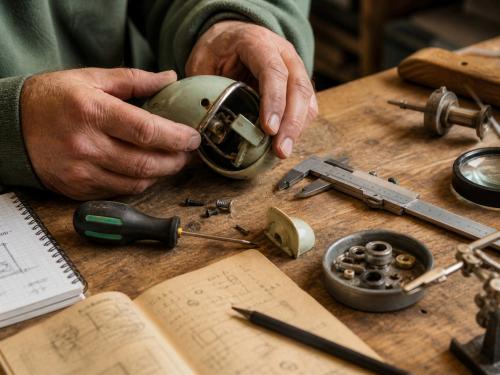 General repair covers practical fault-finding, repair, fitting and adaptation work that is not defined mainly by one specialist capability. It may involve a loose connection, worn mechanism, damaged housing, missing part, incorrect fit or another problem that first needs to be understood.
The badge does not mean that every object or fault can be accepted, and The Owl’s Nest is not a repair café or a general drop-off repair counter. Select a location to see which forms of general repair are explicitly described there and how the work is approached.
A useful repair rarely begins by replacing the first part that looks suspicious. It begins by observing what still works, what does not, when the problem occurs and whether the visible symptom is also the actual cause.
Checking movement, fit, continuity, voltage, wear or documentation can prevent unnecessary work. A short investigation may also show that a repair would be unsafe, uneconomical or unlikely to last.
Photos, sounds, error messages and a clear description of what changed are often as important as the object itself.
Clean, adjust, fasten, reconnect or replace a damaged part so an existing function can be used again.
Change a bracket, cable, connector, control or fastening when the original part is unsuitable or unavailable.
Measure and remake a small component through handwork, machining or 3D design and printing.
Repair can occur within nearly every capability, but that does not make all repair the same. Board-level diagnosis belongs primarily under Electronics; repairing a wooden joint may belong under Woodworking; vehicle work under Automotive; and problems involving software, data or accounts under Digital.
General repair is most useful where the work crosses boundaries or is not dominated by one specialist field. A device may combine a housing, mechanism, cable, switch and custom replacement part. The appropriate route depends on the actual fault and on the knowledge and facilities available locally.
Paul Krugerstraat is the practical workshop location for repairs that benefit from a workbench, general hand tools and access to woodworking or metalworking equipment. Small jobs can often be discussed or started during drop-in hours when the welcome sign is lit. Repairs that need a machine, create noise or sparks, or are likely to occupy the bench for longer are better coordinated in advance.
The local setup is useful for work such as:
A repair can move between general handwork, woodworking and metalworking without needing to be treated as three unrelated jobs.
Paul Krugerstraat is not the main location for board-level electronics, detailed electronic measurement or longer digital investigation. When a repair turns out to be mainly electronic, see Electronics; for software, accounts, data or systems, see Digital.
The more specialised local setups are described at Tugelastraat and Spaarndamseweg. Tugelastraat is particularly suited to complex and precision repairs, while Spaarndamseweg provides a calm appointment-based setup for computer and device testing.
Where practical, bring the complete object together with adapters, cables, loose parts, fasteners and any replacement parts already obtained. Photos and notes about when the fault occurs can help determine whether the repair belongs here or should be continued at another location.
The workshop is not intended for production runs or as an unrestricted drop-off repair counter. The aim is to choose a technically sensible repair and, where possible, let you understand or participate in the work.
Spaarndamseweg is suited to appointment-based repair work where calm, predictable access and an organised test setup are more important than heavy machines. The fixed basis includes a computer-repair workstation, a soldering station and 3D-printing facilities, allowing a small technical object to be inspected, tested and reassembled without competing with general drop-in activity.
The local setup is useful when a fault must be reproduced with the complete device, power supply, cables and peripherals connected. Work can continue through several controlled steps, with parts and fasteners kept organised between inspection, testing and reassembly.
Bring all accessories needed to reproduce the problem. A missing adapter, special cable or login can otherwise make a technically simple appointment unproductive.
For repairs that mainly require woodworking, metalworking or a larger physical workbench, see Paul Krugerstraat. For complex electronics, precision parts, extensive component stock or broader digital investigation, see Tugelastraat.
The local repair can continue through Electronics, 3D printing or Digital when a cable needs soldering, a small part must be reproduced or software and data form part of the fault.
Spaarndamseweg is by appointment, partly because access through the central hall has to be coordinated. Mention any unusual software, components or equipment in advance; not everything is permanently set up or stored at this location.
Tugelastraat focuses on complex and precision repairs that benefit from close inspection, careful measurement, a stable bench and access to a substantial stock of small mechanical and electronic parts. During opening hours you can drop in for a short question or initial assessment; actual repair work and longer investigation are arranged in advance.
The local stock includes metric screws, nuts, washers, C-clips, springs, connectors, plugs, fuses, heat-shrink tubing, resistors and other mechanical and electronic components. This often allows a repair to be completed with a correctly fitting part rather than a temporary improvised fastening or connection.
Special screwdrivers, opening tools and precision tools support devices with proprietary fasteners, snap-fit housings and fine mechanisms.
Work can include computers, laptops, small servers, switches, fans, cables, connectors and fine mechanisms such as a clock movement or a control knob. Diagnosis can continue into soldering, measurement, 3D design or digital investigation without moving the project into an unrelated service process.
The filament and resin printers can reproduce a replacement component or enclosure. A small metal lathe can shorten a metric screw exactly, create a thread relief or lead-in, reproduce a small round part or finish a repaired knob to size. The lathe is used here as repair equipment and does not make Tugelastraat a general metalworking location.
Repairs needing larger woodworking or metalworking machines, extensive grinding, welding or vehicle access are better taken to Paul Krugerstraat. A computer or device that mainly needs calm repeated testing may fit Spaarndamseweg.
Equipment, parts and materials can sometimes be accepted for repair, reuse or as donor stock. Not everything can be stored: condition, useful parts, safety, storage space and the likelihood of meaningful use are assessed first. Contact us in advance for larger quantities.
The workshops below involve repair. Which other capabilities are included varies by workshop.

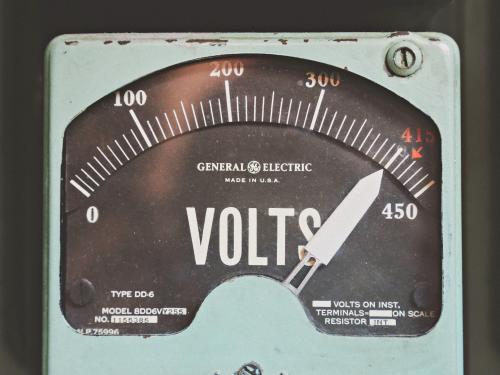 Electricity introduces the basic principles behind electrical systems and how they can be recognised, investigated and approached safely in practical work.


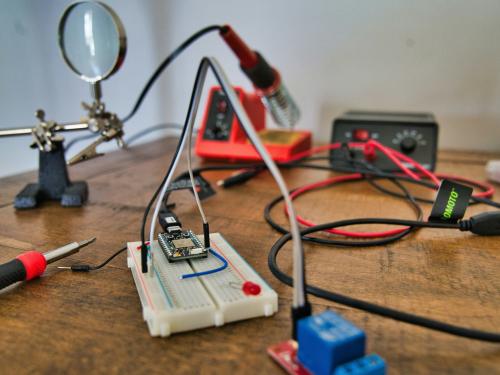 Soldering centres on making and assessing electrical connections, with attention to preparation, heating, the solder joint and inspection.
Requests make specific needs visible, campaigns bring contributions together around a broader or longer-running need, and updates show what is changing. Below you can see the most recent publications in which electronics plays a role.
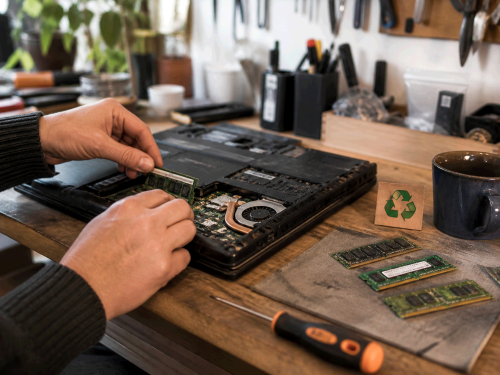
A request for RAM, laptops, desktop PCs and accessories to repair usable hardware, put it back to work and, where possible, pass it on.
Below are projects in which electronics plays a role. Projects are built up and developed over time; how this capability is used or combined with other capabilities varies from project to project.
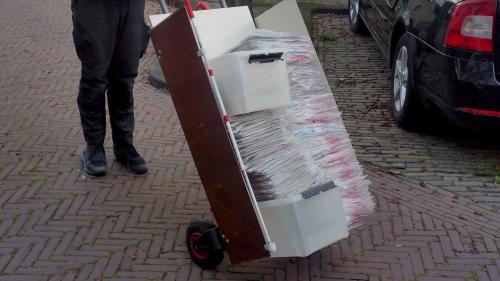
Within ASK-Solutions’ implementation of The Owl’s Nest, regular delivery rounds have been carried out in Haarlem North since 2017. The project brings together recurring responsibility, participation, neighbourhood contact and practical development.
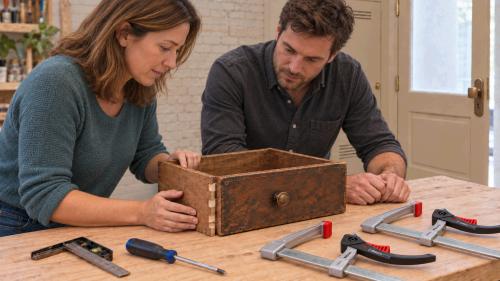
The repair project at The Owl’s Nest – Paul Krugerstraat brings together knowledge, ownership and reuse through practical and craft-based repair, from bicycles and small furniture to metalwork, stained glass and larger household appliances.
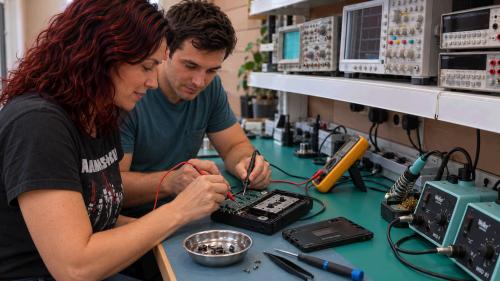
The repair project at The Owl’s Nest – Tugelastraat focuses on computers, software, websites, electronics, electrical equipment and fine mechanical and electromechanical repair.
When possible, bring the complete object or relevant assembly, including adapters, cables, keys and accessories. Also explain:
High voltage, heat, pressure, gas, structural damage, unknown substances or unavailable safety-critical parts may require specialist work. Do not continue using equipment when there are signs of overheating, damaged insulation, smoke, leakage or another immediate risk.
Repair can also be a way to understand the objects and systems on which you depend. For learning through a practical repair project, see Learning through practice. For general equipment principles, see Tools and machines.
Copyright © 2026, ASK-Solutions · The Owl’s Nest is an initiative of ASK-Solutions


 Privacy Policy