
 ,
,


 Automotive
At the moment, you can use automotive at one location. Below you’ll see what’s usually possible there, which facilities are available, and what you can arrange in terms of materials or consumables.
 Paul Krugerstraat 362021 XN Haarlem
 info@the-owls-nest.nl
 +31 23 369 0 269
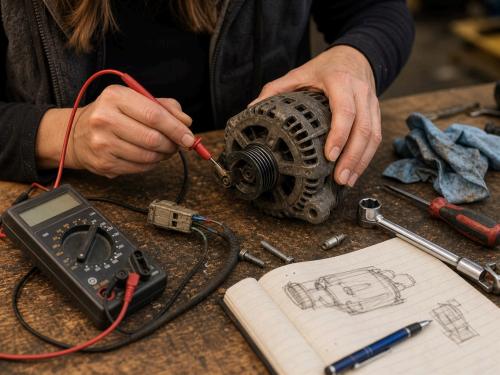 Automotive work can include maintenance, diagnostics, careful repair, replacement of parts, fitting and small fabrication or finishing work. The emphasis is on understanding the vehicle and carrying out bounded work safely.
The capability does not turn a location into a commercial garage. Vehicles, tasks and equipment vary considerably, and some work depends on dimensions, weight, access or a particular setup. Select a location to see its local scope.
A warning light or fault code is a starting point, not automatically a diagnosis. Useful fault-finding combines symptoms, visual inspection, measurements, subsystem status and live data with knowledge of when and how the problem occurs.
The same principle applies outside electronic diagnostics. A noise, vibration, leak, poor fit or intermittent failure should be observed before parts are removed. Notes, videos and previous test results can make a problem easier to reproduce.
Bounded maintenance work can show how a system is assembled and why sequence, cleanliness and correct fastening matter.
Fault codes, live engine data, voltage measurements and battery testing can help distinguish a symptom from its cause.
Brackets, panels and repair sections may require Metalworking or Welding in addition to vehicle-specific knowledge.
Cleaning, sanding, filler, primer and controlled paint application require a suitable material system and surrounding safety conditions.
The capability is intended for car DIY, learning projects and repairs that fit the available space, time and supervision. It does not imply that every vehicle, major dismantling job, structural repair or safety-critical system can be supported.
Where possible, the person bringing the vehicle or part remains involved in understanding and carrying out the work. This turns maintenance and diagnosis into knowledge that can be used again.
A single job may include diagnostics, electronics, metal fabrication, welding, 3D-printed parts or digital documentation. The main capability gives a useful starting point; the location information defines how those areas can be combined.
Paul Krugerstraat is the planned location for small-scale automotive maintenance, diagnostics, repair, fitting, limited fabrication and small paint jobs. Automotive work is always by appointment so the vehicle, lift, space, tools and expected duration can be checked before arrival.
A small mobile lift is available for suitable vehicles up to approximately 1,600 kg. The drive-through height is about two metres, so make, model, weight, height and usable lifting points need to be checked in advance.
The lift does not make every underbody or long-duration job suitable. Work must fit the available space and be capable of being left in a safe state at the end of the planned session.
The local equipment can read fault codes, inspect subsystem status and display live engine sensor values. Voltage meters, battery-testing and reconditioning equipment and tools for timing adjustment can support further investigation.
A fault code is treated as evidence, not as an instruction to replace the named part. Where a fault becomes board-level electronics or a wider software/data problem, the work may be continued through Electronics or Digital at Tugelastraat.
Metalworking and welding can support suitable brackets, repair sections and adaptations. A small HVLP turbine spray system with a 3M PPS cup setup is available for appropriate small paint work.
Common consumables may include abrasives, filler, WD-40, brake cleaner, degreaser and primer. Bring your own vehicle parts, fluids and project-specific products, particularly when a specific brand, colour or material system is required.
Bring the vehicle or part, brand-specific keys or accessories, replacement parts already obtained, and fault codes, videos or notes showing when the problem occurs. The location is not a commercial garage and is not intended for rapid throughput, extensive dismantling or work requiring certified safety-critical repair.
The workshops below involve automotive. Which other capabilities are included varies by workshop.


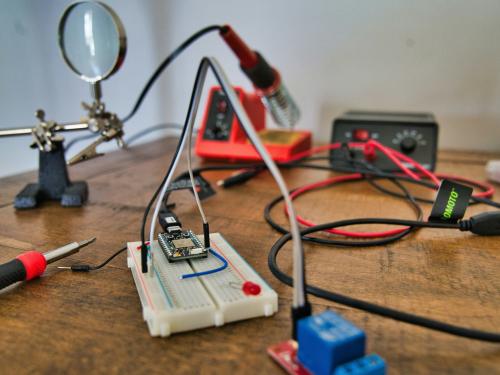 Soldering centres on making and assessing electrical connections, with attention to preparation, heating, the solder joint and inspection.
Below are projects in which electronics plays a role. Projects are built up and developed over time; how this capability is used or combined with other capabilities varies from project to project.
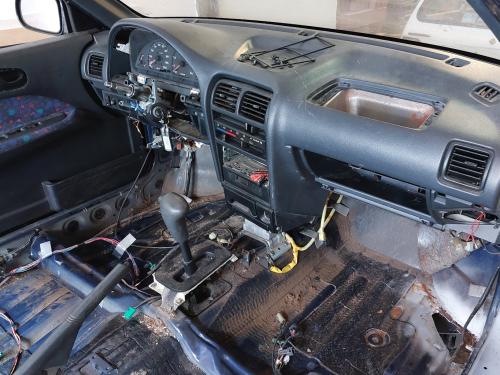
Bōzuki is an ASK-Solutions project with a practical connection to the implementation of The Owl’s Nest: the vehicle is present at Paul Krugerstraat and the project uses the available workshop capabilities.
Automotive work normally requires advance coordination because it occupies space and may depend on a particular setup. For the general principles around tools, lifting and higher-risk work, see Tools and machines.
Copyright © 2026, ASK-Solutions · The Owl’s Nest is an initiative of ASK-Solutions


 Privacy Policy