
 ,
,


 Welding
At the moment, you can use welding at one location. Below you’ll see what’s usually possible there, which facilities are available, and what you can arrange in terms of materials or consumables.
 Paul Krugerstraat 362021 XN Haarlem
 info@the-owls-nest.nl
 +31 23 369 0 269
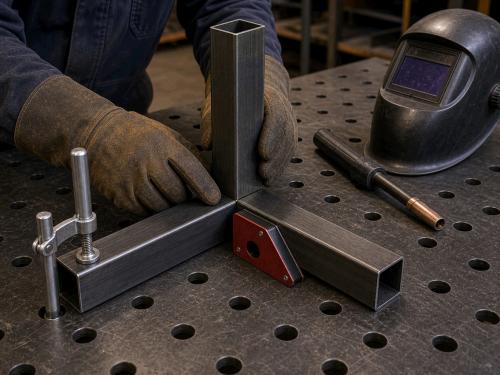 Welding joins metal through heat, filler material or both. It can be used for a new frame or bracket, a repair, a modification or the fabrication of a part that cannot sensibly be made through fasteners alone.
The suitable process depends on the material, thickness, joint, required control and preparation. Select a location to see which methods and working conditions are explicitly described there.
A strong and controllable weld depends heavily on preparation. Parts need to be understood, cleaned, fitted and held in the intended position. Gaps, coatings, contamination, thin edges and poor access can affect the result before welding begins.
Geometry, material and thickness influence whether electrode, MIG, TIG or another approach is suitable.
Cutting, grinding, beveling, cleaning and clamping determine alignment and access. Much of this preparation belongs partly under Metalworking.
Heat can distort parts or damage nearby material. Tack welds, working order and pauses help keep an assembly under control.
The appearance of a weld is not the only measure of quality. Fit, penetration, contamination, distortion and intended load matter. Some work needs grinding or further finishing; other work should be left untouched so the joint remains inspectable.
Welding within The Owl’s Nest is intended for learning, repair and small-scale fabrication—not production runs. Unknown coatings, residues, pressurised sections or structurally critical parts may make an object unsuitable. Some repairs require certified specialist work rather than an informal workshop setting.
Welding at Paul Krugerstraat is available for small repairs, modifications and fabrication work. It is always coordinated in advance because the material, process, joint preparation, fumes, sparks and surrounding workspace have to be considered together.
The wider setup includes stick or electrode welding, MIG and TIG. MIG and electrode work are generally the most straightforward to arrange. TIG must be confirmed explicitly because that setup has not always been available during changes to the workshop.
The nearby metalworking facilities can be used to cut, clean, bevel, fit and clamp parts before welding and to finish suitable work afterwards.
Common consumables for steel have included argon, MIG wire and TIG filler wire. Stick-welding electrodes are not kept as a general stock item, so bring electrodes of the correct type and diameter when electrode welding is planned.
For stainless steel, aluminium, unusual filler material or a specific shielding requirement, discuss what is needed before the appointment rather than assuming the material is available.
Bring the workpiece, a sketch or photograph of the intended joint, and information about material and thickness. Coated, contaminated, closed, pressurised or previously repaired objects need to be identified before they are heated.
The workshop is intended for learning, repair and small fabrication—not certified structural work, pressure vessels, production welding or jobs where the final result requires formal assurance. Where the risk or required certification falls outside the setting, we will advise using a specialist.
Below are projects in which welding plays a role. Projects are built up and developed over time; how this capability is used or combined with other capabilities varies from project to project.
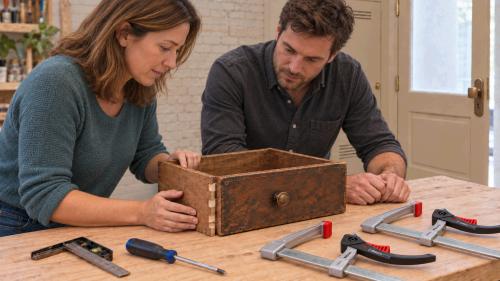
The repair project at The Owl’s Nest – Paul Krugerstraat brings together knowledge, ownership and reuse through practical and craft-based repair, from bicycles and small furniture to metalwork, stained glass and larger household appliances.
Describe the material, thickness, proposed joint and intended use. Explain whether the work is a repair or a new part and which loads, heat or environment the result must withstand. Bring job-specific filler, electrodes or other consumables where required.
Welding requires protection from radiation, heat, fumes, sparks and hot material. The surrounding workspace matters as much as the welding machine. See Tools and machines for the general safety principles, and use Make an appointment to discuss a project in advance.
Copyright © 2026, ASK-Solutions · The Owl’s Nest is an initiative of ASK-Solutions


 Privacy Policy