
 ,
,


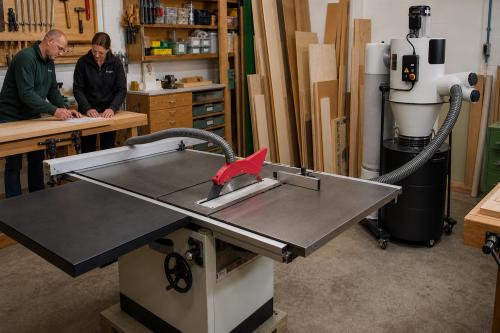
Tools extend what hands and senses can do. A carving tool follows the grain of wood, a microscope reveals a damaged connection, a fixed machine produces a repeatable cut and a digitally controlled process turns a drawing into a physical part. Each tool creates its own way of seeing, measuring and shaping the work.
The useful question is therefore wider than which machine is available. The material, the intended result, the person using the equipment and the surrounding workspace all influence which process fits. A simple hand tool can provide the best control for one step, while another project benefits from extraction, guarding, programmed movement or a carefully prepared specialist setup.
The capability pages describe the thematic areas in which tools and machines can be used. Location pages describe the local facilities and conditions. This page explains the principles that connect those different environments.
Hand tools keep movement, pressure and feedback close to the person using them. Cutting, carving, stitching, folding, pruning, fitting and measuring can develop through small corrections that remain visible and understandable.
Condition matters. A damaged handle, loose head, blunt edge or unsuitable support changes how a tool behaves. Inspection, sharpening, correct adjustment and a stable workpiece are part of ordinary preparation.
Powered tools and fixed machines add speed, force and repeatability. They can cut, drill, sand, turn, mill, sew, grind or shape material with a level of consistency that would take much longer by hand.
The workpiece is supported and secured before the machine starts. Guards, fences, guides, push tools, extraction connections and emergency controls remain in place throughout normal use. Clothing, hair and accessories are kept clear of moving parts.
CNC machines, laser systems, 3D printers and other digitally controlled equipment can repeat complex paths and connect design work directly with fabrication. Their accuracy depends on decisions made before the job begins.
Material, scale, clamping, origin points, toolpaths, power settings and expected emissions are checked in advance. Enclosures and interlocks provide part of the protection, while observation and a clear stopping procedure remain part of the process.
A machine reaches beyond its visible cutting edge, needle, beam or heated surface. It also includes the bench or stand, guards, power connection, extraction, lighting, available space and the route by which material enters and leaves the working area.
The machine is checked for damage, correct adjustment and working safety controls. The surrounding area remains clear enough to handle the workpiece without losing balance or blocking another person’s route.
Setting, cleaning, changing a blade or bit and removing a blockage take place with movement stopped and the energy source isolated where the task requires it. A machine carrying a fault notice or awaiting maintenance stays out of use until it has been assessed.
A cut or programmed movement is considered before power is applied. The workpiece needs enough support, and the person using the machine needs a stable position with hands outside the path of the tool and material.
Test pieces and dry runs make hidden assumptions visible. They can reveal an incorrect dimension, unsuitable speed, weak clamping arrangement or toolpath that approaches a fixture. This preparation protects the material as well as the people and equipment around it.
Cutting, sanding, routing, grinding and similar processes release material in several forms. Larger chips may fall close to the machine while finer particles remain airborne and travel through the room. The extraction arrangement is chosen around the way the process releases that material.
Machine extraction and portable local exhaust capture dust and particles before they spread through the workspace. Hoods and connections are positioned around the actual source, with enough airflow for the process being used.
A cyclone can separate heavier chips and dust before the air reaches finer filters. This reduces the load on the filter and helps the system retain airflow. Fine filtration deals with the smaller material that continues through the separator.
Extraction only remains effective when ducts are connected, containers have capacity and filters are in suitable condition. Airflow indicators, visual checks and maintenance help show when performance has changed.
Room air cleaning can collect part of the material that escapes source capture. Cleaning methods avoid sweeping fine dust back into the air, and collected material is handled in a way that limits further exposure.
Processes that create combustible dust, hot particles or sparks also require attention to separation, ignition sources and the safe collection of waste. The extraction method must suit the material; a system used for ordinary wood dust may be unsuitable for hot metal particles or reactive substances.
Soldering, welding, laser processing, resin work, painting, cleaning and chemical preparation can release substances that are difficult to judge by smell or visible smoke. Local exhaust is placed close to the point where the fume or vapour is generated, so it moves away from the breathing zone before it disperses through the room.
Soldering stations use local fume extraction positioned near the work. The iron temperature is kept appropriate to the process and the person working keeps their face outside the rising plume.
Welding and other hot work use a prepared area with suitable extraction, shielding and control of sparks and heated material. Coatings, contamination and the composition of the workpiece are considered before heat is applied.
Enclosures and ventilation can reduce emissions from 3D printing and help keep the process separated from general activity. Uncured resin and cleaning solvents are handled within a prepared area using protection selected for those substances.
Washing, curing and disposal form part of the resin process. Surfaces and tools are arranged so uncured material does not migrate into ordinary work or contact areas.
Labels, safety information and compatibility are checked before substances are mixed, heated, distilled, dissolved or filtered. Volatile or reactive work uses suitable containment or local extraction, including a fume cupboard where the process calls for one.
Quantities remain appropriate to the activity. Containers, secondary containment and waste routes are prepared before work begins, and incompatible materials are kept apart.
A laser adds an optical hazard to the ordinary risks of movement, heat, fire and process emissions. An enclosed laser system uses its housing, interlocks, controls and extraction as one coordinated safety arrangement. The enclosure remains closed during normal operation, and safety interlocks are not bypassed.
The material is identified before a laser job is prepared. Cutting or engraving changes part of that material into gases and particles, so material suitability and extraction matter alongside power and speed. Reflective surfaces, unknown plastics and materials with coatings or fillers require assessment before they enter the machine.
CNC equipment brings similar attention to setup. The program can move a tool with repeatable force even when the operator has misunderstood the origin, scale or fixture position. Toolpaths are reviewed, the workpiece is clamped securely and the first movement is observed closely. Access to the working area remains controlled while the machine is moving.
Workshop locations select personal protective equipment around the material, process and remaining exposure after the workspace and equipment controls have been prepared. Eye protection can address chips, splashes or optical hazards. Hearing protection can be used where machine noise requires it. Footwear and clothing help protect against dropped workpieces, hot material and contamination.
Gloves are selected for a specific purpose such as chemical contact, heat, sharp edges or dirty work. They are kept away from drills, lathes and other rotating parts where fabric can be caught and drawn into the machine. Chemical gloves are chosen for compatibility with the substance, since one glove material does not protect against every resin, solvent or reagent.
Respiratory protection may be added where the process assessment calls for it. Its filter, fit and period of use need to match the exposure. Extraction, enclosure and process design remain the main controls for airborne material.
People can begin with tools that match their current experience and the step they want to learn. Instruction covers the intended use, the preparation of the workpiece, the machine controls, the expected hazards and the way to stop safely.
Some equipment can be used independently after a clear introduction. Other processes remain supervised or are carried out together because setup, material or stored energy requires more experience. A person can pause the work whenever something sounds, smells, moves or responds differently than expected.
Maintenance and faults are communicated openly. A guard that no longer closes correctly, extraction that has lost airflow or a tool that behaves unpredictably is taken out of normal use until the condition has been resolved.
Tools and machines gain meaning through the work they support. Visit What you can work on to explore the technical, creative and practical capability themes. The locations overview explains how each local workshop interprets those themes and which facilities and arrangements are described there.
People who want to develop confidence through a practical project can also explore Learning through practice. Questions about a process, machine or suitable starting point can begin through Make an appointment.
Copyright © 2026, contributors to The Owl’s Nest · Powered by Nocterra 


 Privacy Policy