


At present, no operator or location has information available for care and support.
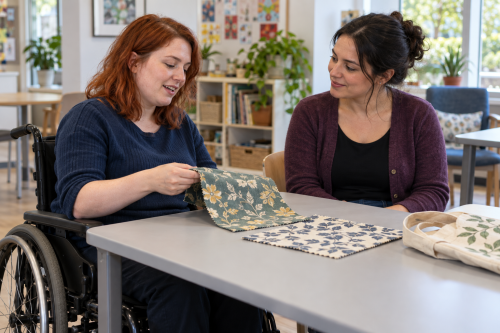 Care and support is about assistance that helps someone take part in everyday life, make choices and pursue activities that matter to them. Support can be informal, peer-based or professional and can range from a small amount of practical help to more structured assistance.
Within the shared work model, a practical or creative activity can provide the setting in which that support is arranged. The activity can remain real work — making, repairing, designing, learning or meeting others — while access, pace, task size or assistance are adapted to the person and the situation.
With these capabilities, the relationship develops when support, access, pace, task size or assistance are deliberately adapted around the person and the activity.


Practical making, repair and everyday activity can provide a meaningful setting for care and support when the person chooses the activity and support is adapted to access, pace and task size. The practical purpose of the work can remain real while assistance is arranged around the person.


Creative and material activities can offer a setting in which someone makes choices, explores personal meaning and works at a suitable pace. Support can make the activity accessible while leaving the person free to decide what the work means to them.


Design, technical investigation, science and digital work can fit within support arrangements when they help someone pursue a chosen project, work through a problem step by step or gain more control over everyday systems. Support can be adapted to the person’s choices and the complexity of the task, with attention to privacy.

Social contact can form part of care and support when assistance is deliberately arranged around someone’s preferences, relationships or participation needs. That support may be informal, peer-based or professional, depending on the situation.
Copyright © 2026, contributors to The Owl’s Nest · Powered by Nocterra 


 Privacy Policy