
 ,
,


 Bicycles
At the moment, you can use bicycles at one location. Below you’ll see what’s usually possible there, which facilities are available, and what you can arrange in terms of materials or consumables.
 Paul Krugerstraat 362021 XN Haarlem
 info@the-owls-nest.nl
 +31 23 369 0 269
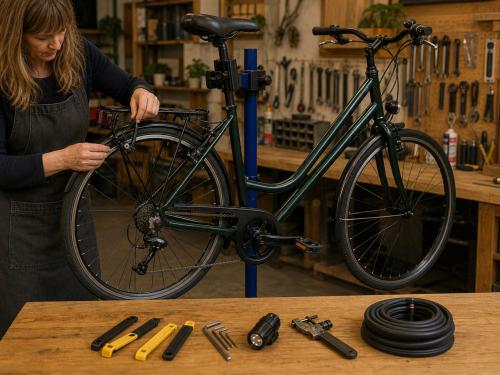 The bicycles capability centres on practical maintenance, repair and adjustment. This can range from repairing a puncture or replacing a broken stand to adjusting brakes, gears, saddle height and other parts that determine whether a bicycle works safely and comfortably.
Bicycle designs, parts and specialist knowledge differ considerably, especially where mechanical and electrical systems meet. Select a location to see the forms of bicycle work that are explicitly described there.
A problem that appears in one place can have its cause somewhere else. Poor braking may come from adjustment, worn pads, a damaged cable or a wheel that is not running correctly. Difficult shifting may involve cable tension, alignment, chain wear or the condition of the gears.
Find the cause of a puncture, repair or replace an inner tube, fit a tyre and check whether the wheel and rim remain usable.
Cables, pads, levers, shifters and adjustment determine whether the bicycle stops and changes gear reliably.
Saddles, handlebars, pedals, stands, mudguards, carriers, lights and displays can need adjustment, fastening, replacement or a small adaptation.
Bicycle repair is well suited to learning through participation. A puncture, cable adjustment or loose fitting can be inspected together so the person using the bicycle understands what happened and which steps are involved in the repair.
This is different from treating the bicycle as an anonymous object that is simply dropped off and collected later. Depending on the task and circumstances, someone may carry out much of the work with explanation or guidance, or participate in the diagnosis and understand why a particular repair is chosen.
Modern bicycles commonly include LED lighting, wiring, displays, switches and other electrical components. An e-bike may also have a display or control unit that needs to be mounted securely or reconnected as part of a repair.
Some problems remain mainly mechanical, while others require measurement, soldering or investigation under Electronics. The presence of an electrical component does not imply that every battery, motor or proprietary control system can be repaired.
Paul Krugerstraat provides the physical workshop setting for bicycle maintenance, repair and adjustment. Common work can include punctures and tyres, brake or gear adjustment, chains, saddles, handlebars, stands, mudguards, luggage carriers, lighting and the fitting of accessories.
The workbenches and general hand tools support ordinary disassembly, fitting, fastening and adjustment. A bounded job can often be inspected together so you can understand the relevant parts and participate in the repair rather than only dropping the bicycle off.
Bring the replacement tube, tyre, brake pads, cable, stand, accessory or other part where you already know what is required. When the correct part is uncertain, the first step may be measuring and identifying it rather than beginning the repair immediately.
LED lighting, wiring and securely reattaching an e-bike display or control unit can form part of a bicycle repair. If the job requires soldering, connector repair or detailed electronic diagnosis, see Electronics and the precision electronics setup at Tugelastraat.
The capability does not imply unrestricted work on proprietary batteries, motors, displays or controllers. Some systems cannot be meaningfully tested or repaired without manufacturer-specific documentation, parts or software.
Small questions may fit a drop-in moment when the welcome sign is lit. A bicycle that occupies significant space, needs several parts or cannot safely be ridden should be discussed before transport. Do not ride it to the location when brakes, steering, wheels, frame or another safety-critical component may be unsafe.
The workshops below involve bicycles. Which other capabilities are included varies by workshop.


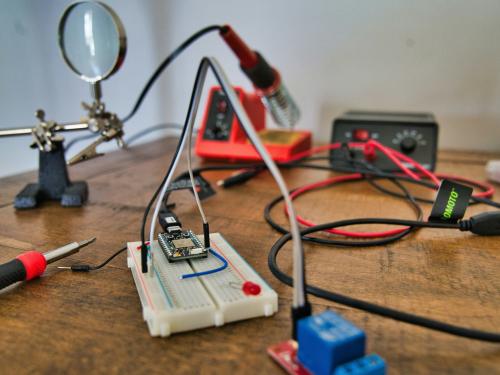 Soldering centres on making and assessing electrical connections, with attention to preparation, heating, the solder joint and inspection.
Below are projects in which electronics plays a role. Projects are built up and developed over time; how this capability is used or combined with other capabilities varies from project to project.
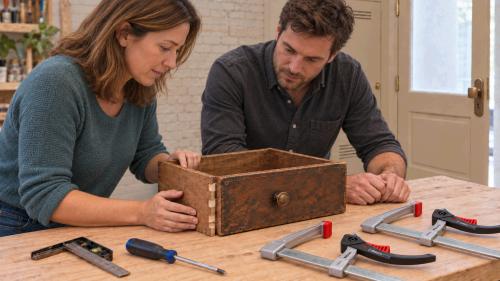
The repair project at The Owl’s Nest – Paul Krugerstraat brings together knowledge, ownership and reuse through practical and craft-based repair, from bicycles and small furniture to metalwork, stained glass and larger household appliances.
Describe the type of bicycle, what happens and when the problem occurs. Mention whether the fault appeared suddenly or developed gradually, and bring parts or accessories you want to install.
For an e-bike or electrically equipped bicycle, bring the keys, charger and removable display when they are needed to reproduce the problem. Do not continue riding when brakes, steering, wheels, frame or another safety-critical part may be unsafe.
Maintenance can also reveal wear before it becomes a breakdown. Checking tyres, brake response, chain condition, fastenings and lighting is part of keeping a bicycle understandable and usable.
Copyright © 2026, ASK-Solutions · The Owl’s Nest is an initiative of ASK-Solutions


 Privacy Policy