
 ,
,


 Textiles
At the moment, there is no location available for textiles. We’re working to make this possible again soon. Keep an eye on the website or get in touch for the latest status.
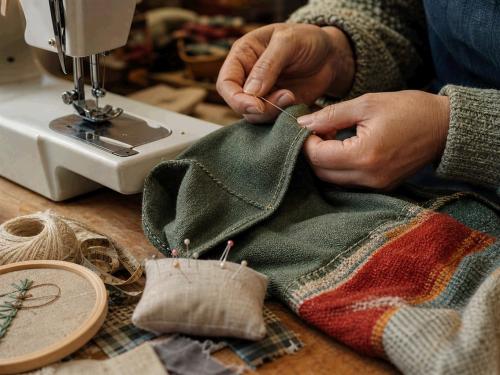 Textiles covers repair, alteration and making with fabric, thread and yarn. It can include mending clothes, adjusting fit, sewing a new object, adding embroidery, knitting or exploring another textile technique.
The capability is deliberately broader than one machine, workshop or hobby. Different materials and methods require different tools and experience. Select a location to see its local scope.
A repair or alteration should first examine fibre, weave or knit, stretch, thickness, previous stitching and the forces on the damaged area. A neat-looking repair can still fail quickly when it ignores how the material moves.
Repair tears, loose seams, worn areas, missing fastenings or damaged edges by hand or machine.
Adjust hems, seams, straps or other parts to improve fit or function without cutting before the construction is understood.
Develop an object or garment from a pattern, an example or directly measured dimensions.
Embroidery, knitting and related techniques can create both structure and image. Decorative work may stand on its own, personalise an object or be combined with repair and construction. Pattern, colour and texture connect textile work naturally with Visual arts.
Textile work can also be technical. Seams, allowances, reinforcement, closures and order of assembly determine whether separate pieces become a usable whole. A small sample can reveal whether thread tension, stitch, needle and material work together before the main object is used.
Textile projects can be difficult to reverse once material has been cut or an original seam has been removed. Inspect, measure, mark and test on spare material where possible. Patterns still need to account for seam allowance, fabric direction, stretch, closures and finishing.
Bring the garment, fabric, yarn or object; the intended result; measurements or a pattern where relevant; matching or deliberately contrasting thread and material; fastenings; and spare fabric for testing when available.
The availability of a particular sewing, embroidery or other textile machine should not be assumed from the general capability. The location-specific information and related workshop section define its actual local form.
Copyright © 2026, ASK-Solutions · The Owl’s Nest is an initiative of ASK-Solutions


 Privacy Policy