
 ,
,


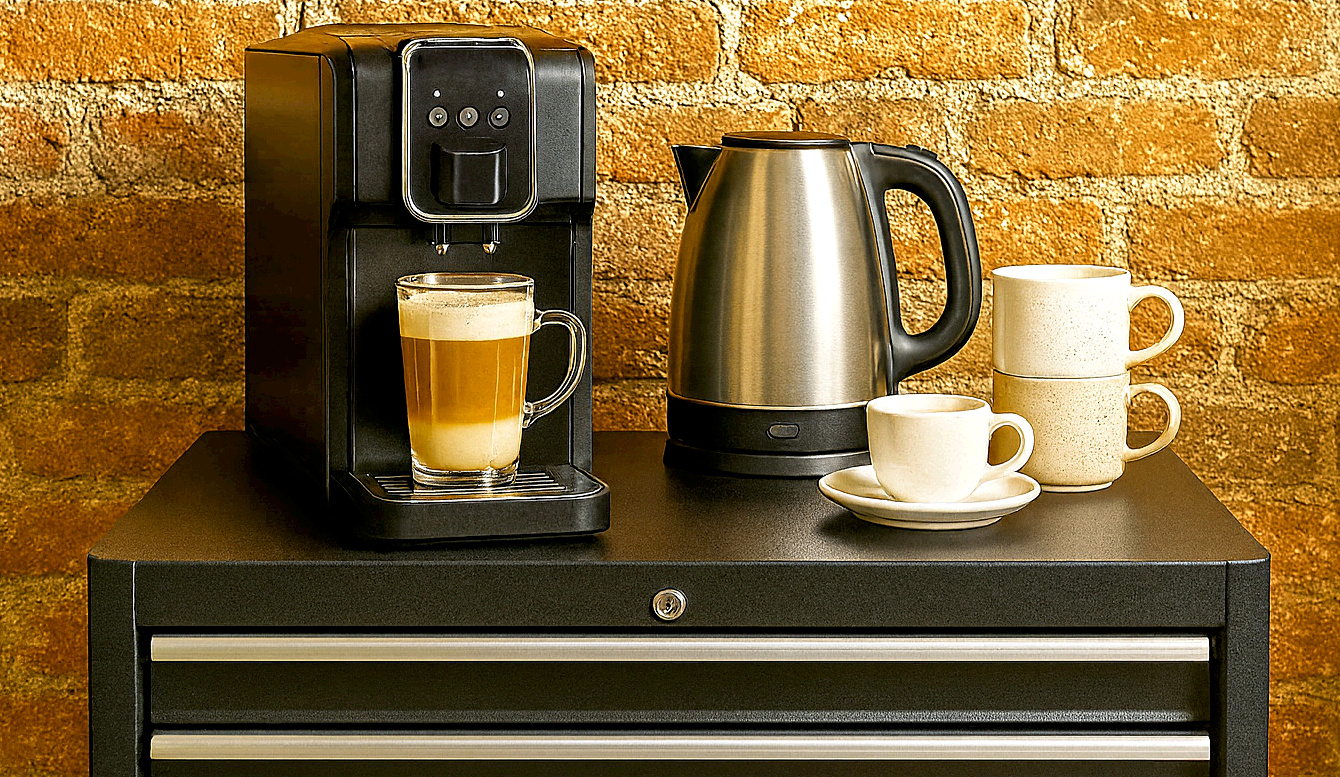 Coffee corner is a project within ASK-Solutions’ implementation of The Owl’s Nest at the Paul Krugerstraat location. Within this implementation, it gives a recognisable place to something that has been part of the way of working for much longer: people should be able to meet, sit together, share knowledge and experience, and simply spend time there without immediately having to complete a task or produce something.
Meeting people, sharing knowledge, doing practical things together and making room for people all grow from the same underlying principles. Throughout this history, these have repeatedly taken forms suited to the place and the people who came together there.
Even before there was a dedicated formal space in Overveen, social contact played an important role. For Piet de Wit, that social character was itself a reason to come to the college. Meeting people, sitting together, exchanging knowledge and experience, and being part of what was happening were therefore part of the practice from an early stage. More about Piet, Overveen, Koningsteinstraat and the development from which The Owl’s Nest eventually emerged can be found on the History page.
In Overveen, meeting people took shape in part around the Sipke Wynia bar. Through Chris, a friend, volunteer and teacher, there was also a steady flow of espresso equipment. Making coffee, sitting together and talking became a natural part of the place alongside its other activities.
At Koningsteinstraat, meeting people was again an important part of what happened there from the outset. Through the Islamic mosque and youth association, the combination of practical activities and a meeting place for the community took a clear form. A large meeting room offered sofas, tables and chairs, with Turkish coffee and tea as a familiar part of spending time together.
Within the implementation at Paul Krugerstraat, coffee, conversation and meeting people were part of the practice from the beginning. These later gained a more clearly recognisable place within the workshop: the coffee corner.
Visitors, volunteers and local residents can sit down there for a while, have coffee or tea, talk or simply spend some time there. Sometimes this is no more than a brief greeting or a few minutes around the table. At other times a longer conversation develops, or someone returns to sit down again later.
The coffee corner forms its own part of what is possible within this implementation: a place where meeting, resting, talking and simply being together have value in themselves.
Nothing needs to be organised before people can meet. Someone can drop in for coffee, come to see another person, join others at the table or sit quietly without saying much. When people encounter one another more often, faces and names become familiar and conversations are easier to continue.
There is no fixed subject for those conversations. They may be about technology, a project, music, work or study, or about something else happening in someone’s daily life. Sometimes knowledge is exchanged, sometimes practical help develops, and sometimes it simply remains a matter of having coffee together.
With no predetermined outcome attached to it, contact can develop at its own pace.
The coffee corner sits in the middle of an environment where many things happen. People come and go, things are made and repaired, projects are discussed and ideas are tried out. Conversation, meeting people, sharing knowledge and practical activities can therefore flow naturally into one another and reinforce each other.
Someone may come in for coffee and later become curious about a project. A conversation about a technical problem may continue around the table. A visitor may meet someone with the same interests or with very different experience. Different ways of taking part exist alongside one another in the same place and can naturally create new connections.
In December 2025, the coffee corner developed a clearer identity of its own around Tenzen. Tenzen was given a permanent place on a whiteboard and became a recognisable face of the coffee corner.
This gave a visible identity to the character that had already grown through the way the place was used. Tenzen made the coffee corner easier to recognise within the workshop as the informal meeting place it had become in practice.
The present coffee corner connects with a much longer history of meeting places in the work from which The Owl’s Nest developed. In Overveen, at Koningsteinstraat and later within the implementation at Paul Krugerstraat, space for sitting together, sharing coffee or tea, exchanging knowledge and meeting other people repeatedly took forms that suited the place and the people.
Coffee corner at The Owl’s Nest – Paul Krugerstraat gives that longer history a recognisable form within ASK-Solutions’ current implementation: a place where meeting other people is in itself enough reason to be there.
The broader capability for giving social contact a place within the shared work model is described under Social contact.
This project relates to several capabilities from the shared work model that forms part of the The Owl’s Nest project. These capabilities describe recognisable areas of knowledge, practical skills and facilities that may play a role in carrying out a project. Through Social contact you can read more about what these capabilities mean and how their practical implementation may differ between operators and locations.
Copyright © 2026, ASK-Solutions · The Owl’s Nest is an initiative of ASK-Solutions


 Privacy Policy