
 ,


When the space at Paul Krugerstraat came into use, having our own electricity, water and gas connections was not straightforward. The premises had been purchased privately and were made available almost immediately for the work being developed there. The utility connections that originally served the space, however, were located in a meter cupboard by a shared entrance. Those connections had been disconnected and could no longer be used.
The location was already in use in the meantime. For electricity, we were temporarily able to rely on Mr Hartendorp, our neighbour at number 34, while water was supplied through a submeter. We had no gas. We also did not know how much capacity was actually available through the temporary electricity supply, so we limited ourselves mainly to low-power equipment.
Temporary electricity and water allowed us to continue, but the possibilities remained limited. Having our own connections not only provided independence, but also made the available electrical capacity clear and allowed us to continue developing the workshop without depending on temporary supplies.
This also meant building a new utility meter cupboard at Paul Krugerstraat. Volunteers carried out almost all of the preparatory, construction and finishing work. Only work that officially had to be carried out by professionals, including the actual connection of the utilities, was done by professionals.
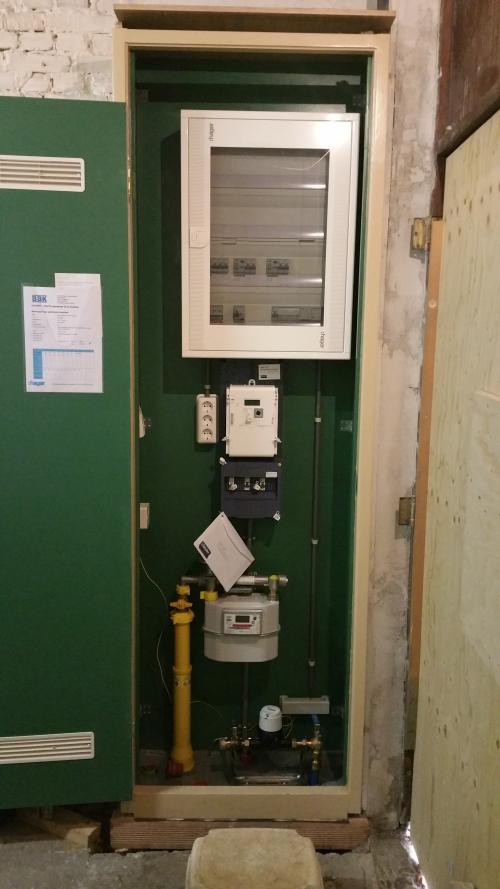
The space directly beside the front door was effectively the only logical place for the new meter cupboard. It allowed the new connections and service ducts to be brought together while fitting the cupboard into the existing building.
Before the cupboard itself could be built, the floor first had to be opened up. This created room for the service ducts and for the structure that would support the cupboard.
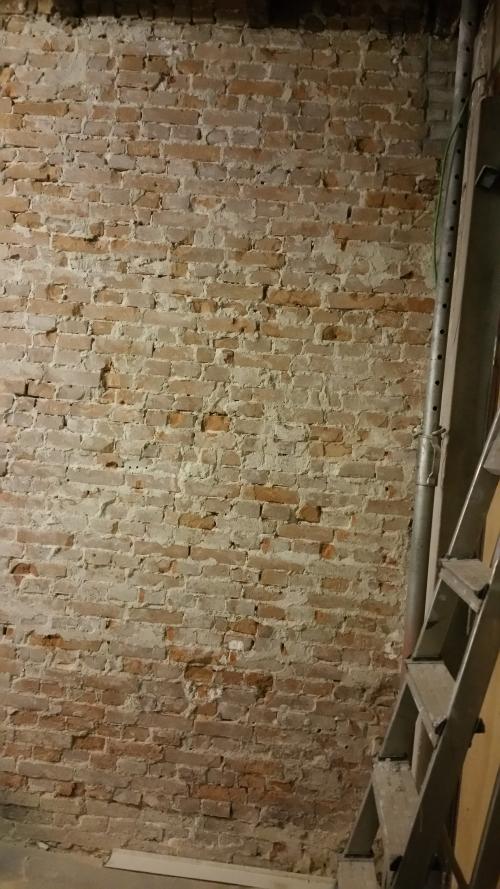
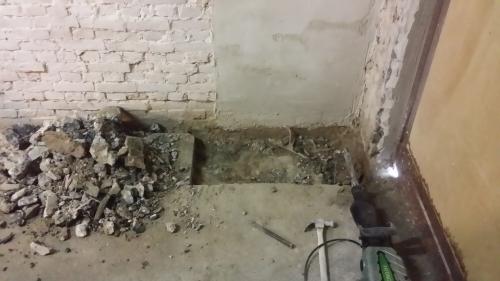
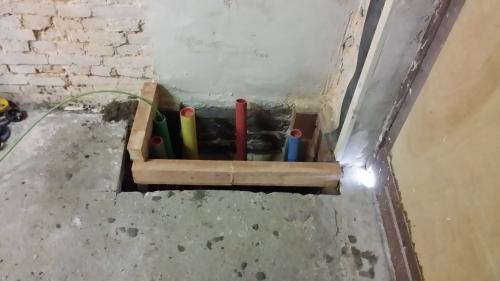
Sections of masonry were built on either side of the opening in the floor to support the meter cupboard. At the same time, sufficient room had to remain for the various service ducts. Much of this work would eventually disappear beneath or behind the cupboard, but it formed the basis for everything above it.
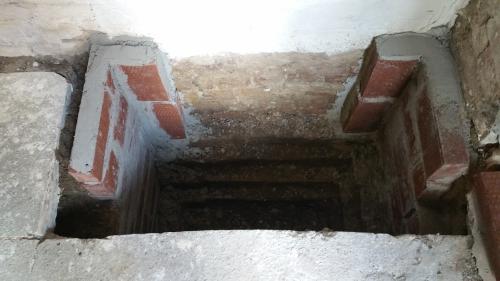
The floor around the service ducts was then closed up and finished. The exact material used at the time is no longer known with certainty. The photographs show the floor layer being applied and finished during the work.
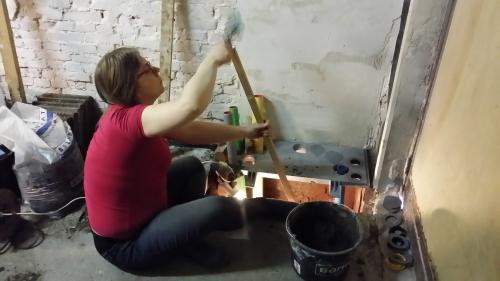
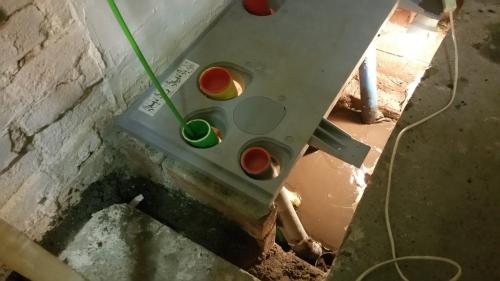
With the base prepared, the cupboard itself could take shape. The woodwork had to fit the existing wall, floor and doorway accurately. The door, painting and openings for ventilation followed as part of the finishing work.
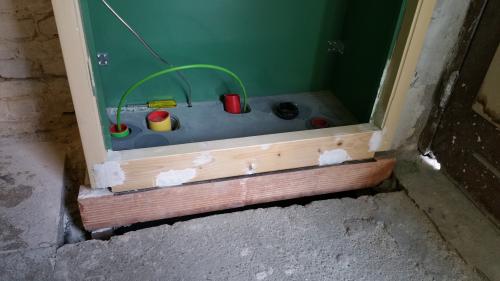
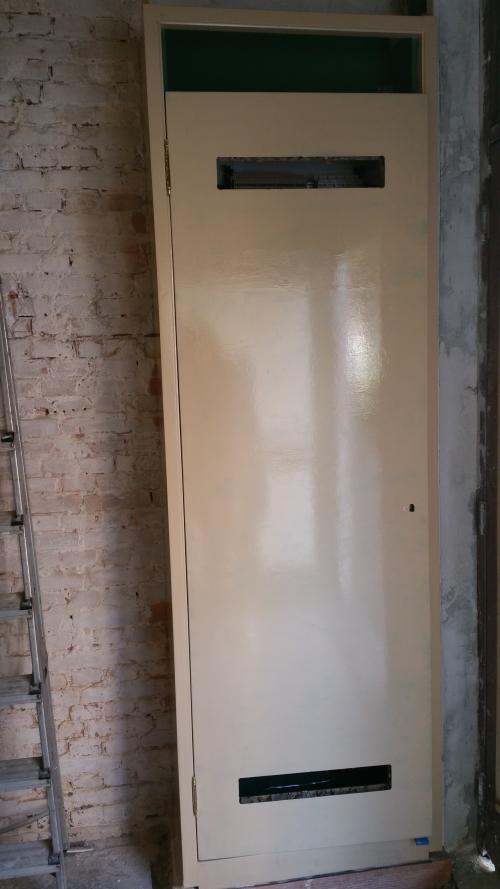
By 17 October 2017, the meter cupboard had been completed. Electricity, water and gas services came together in a single cupboard. Infrastructure for KNX and internet was also incorporated.
Having our own connections removed an important limitation on the workshop. We no longer depended on temporary electricity with an unknown available capacity or on water supplied through a submeter. Equipment could now be used on our own electrical connection with a known capacity, while water and gas were independently connected as well.
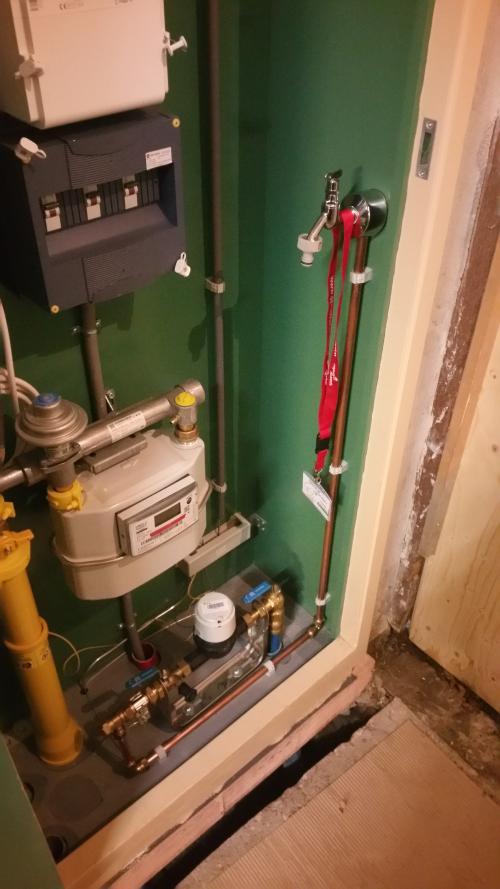
Not all volunteering consists of activities that remain directly visible afterwards. In this case, much of the work involved breaking out the floor, building masonry, repairing the floor, fitting woodwork, painting and finishing. Once the cupboard was complete, some of that work disappeared from view altogether.
It was precisely this preparatory work that made the next steps possible. The location was already in use, but having its own utility connections allowed the workshop to be developed and used much more independently and without the limitations of the temporary supplies.
Would you like to contribute in a practical way? Read more about volunteering or view the current requests where help is welcome.
Copyright © 2026, contributors to The Owl’s Nest · Powered by Nocterra 


 Privacy Policy